They Can’t All Be Gems

C563B074-2B4B-47F5-888A-906AA0D8C6DB
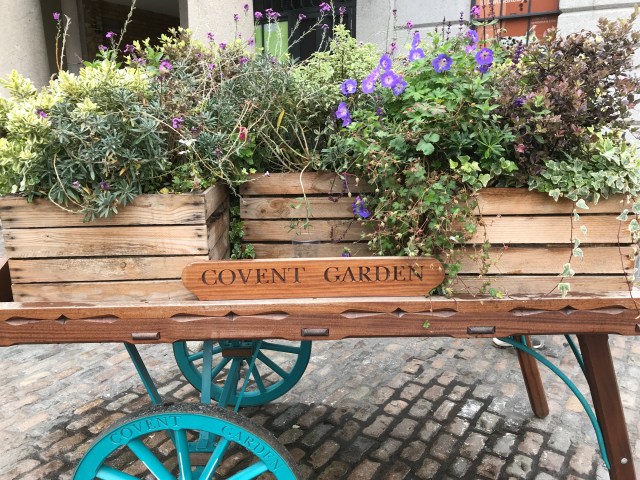
Covent Garden Flower Cart

We started our fourth day in London with a walk to Covent Garden, home of the Royal Opera House . When I think of Covent Garden, I think of Eliza Doolittle in My Fair Lady and Drury Lane, home of the muffin man. We strolled through the markets, looked in the shops, and then made our way to the Royal Opera House. We saw people queuing up in the lobby and learned they were going to a rehearsal of the Royal Ballet. We tried to get tickets but were informed it was for members only. Instead we walked around the building, enjoying the views and the historical displays. It’s a beautiful venue and I hope one day we have the opportunity to see a performance there.

Covent Garden
Street Performers at Covent Garden

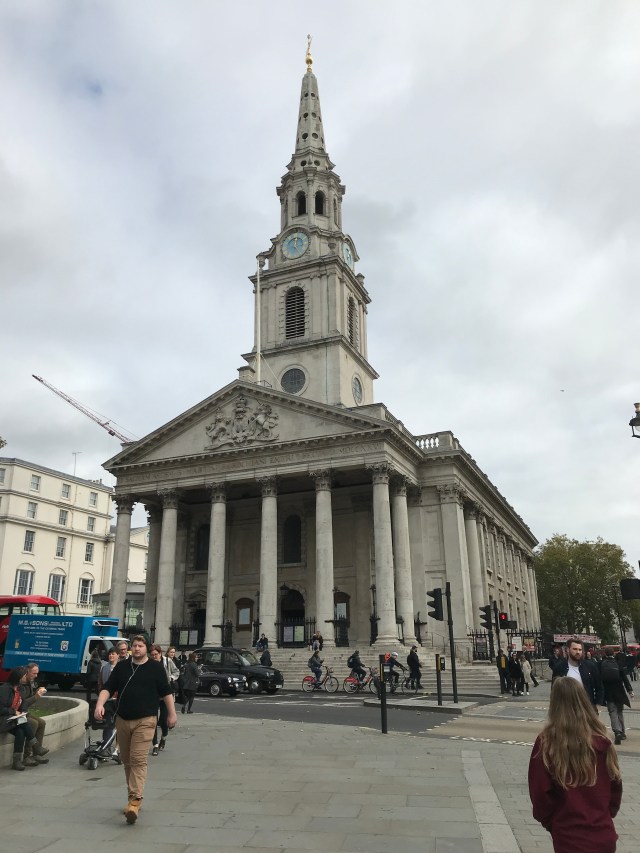
We went back out on to the piazza to check out the street performers. At Covent Garden, street acts have to audition for a permit and are given a scheduled time when they can perform. We heard a quartet in the courtyard and then watched a weirdly compelling act by a contortionist. I wish we had more time to explore this area, but we decided to head back to Trafalgar Square and St. Martin-in-the-Fields, a church known for its music and charitable work. Today they had a free lunch concert featuring St. Martin’s Voices Fellows, seven young singers who are participating in the fellowship program of the St. Martin Voices vocal ensemble. They performed choral works and solos by Handel, Purcell, and Mozart and it was a very pleasant hour.
670C2E2D-3CD2-43C5-BF1B-FD27CCD94906
St. Martin-in-the-Fields

Since we were at Trafalgar Square and had a little time to kill, we went back to the National Gallery to see the Courtauld Impressionists  exhibit that we missed yesterday. It’s a small exhibit but worth seeing if you love impressionist painting as we do.

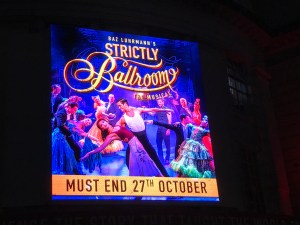
After an early dinner at a pub, we returned to the hotel to change and board a bus to take us to the evening’s show, Strictly Ballroom at the Piccadilly Theater. I really wanted to like this show, but I didn’t. It had a great band, good dancers, spectacular costumes, and lots of energy, but no heart. It was fluff piece that was funny at times but not at all moving. In our discussion afterward, many people said the movie was better (I haven’t seen it), and there was some talk about how theaters have to put on shows that reflect modern musical taste and will draw large audiences (like Mamma Mia) to stay in business.  I’m not sure I believe that.
857B3D4B-1FD1-4172-B5EA-737422133459
Strictly Ballroom Marquee

Tomorrow we have a daylong tour including afternoon tea at Westminster Abbey and then Company in the evening. Company is one of my favorite shows and I’ve been looking forward to this new production. I hope it does not disappoint.
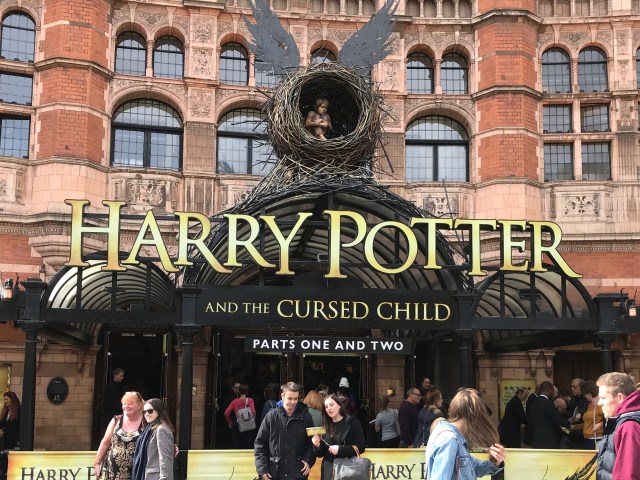
In the Land of Harry Potter

Palace Theater
Entrance to Palace Theater

Today was a beautiful, sunny day that would have been perfect for strolling through the many London parks, but we had tickets for a six-hour theater experience that I’m happy we didn’t miss. This was the one day when there were no tour events so we were totally on our own. Our friends at MSMT suggested we see Harry Potter and the Cursed Child at the Palace Theater, so we booked the tickets several weeks ago.

82958784-EA64-45DE-93F4-263238FC56AB
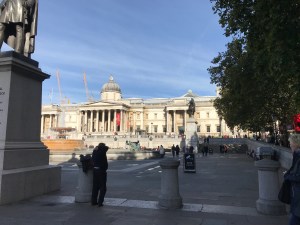
Trafalgar Square and the National Gallery

The show is in two parts, a matinee and an evening performance. We picked up our tickets early and had about an hour and half to kill before the theater opened, so we strolled through Trafalgar Square and visited the National Gallery. We didn’t have enough time to see everything, so we zipped through and will probably return later this week to see their impressionist exhibit.

We returned to the theater and waited in a long line for everyone to get through security. The Palace Theater is amazing and probably the perfect venue for this show. We were seated next to a little girl who dressed like Hermione, complete with robe and briefcase. She was celebrating her 10th birthday and told us that she had read all the books and the play script, but she promised not reveal the ending to us. The story picks up where the last book left off, with Harry married to Ginny and sending their two boys off to Hogwarts, while their daughter moans about not being old enough. The plot centers on the middle child Albus who is always in the shadow of his father and older brother and feels like a misfit at Hogwarts.

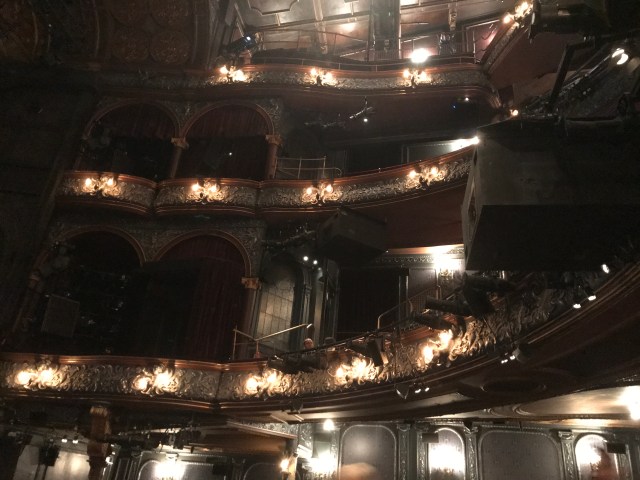
Palace Theater
Looking up into the balconies of the very ornate Palace Theater. The photo doesn’t do it justice; you have to see it.

The show was an amazing combination of magic, music, and incredible costumes and staging, including dementors who fly out over the audience at the end of Part One. Each part was three hours long, but the time flew by.  There was a 2-1/2 hour break between the afternoon and evening performances, so we joined some of the other members of our tour for dinner at the Cambridge, a pub nearby where I had an excellent lentil cottage pie.

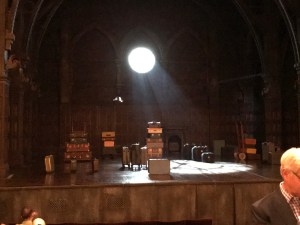
Palace Theater Stage
The stage set for the opening scene

Part of the fun of this show was watching the reactions from the children in the audience, including the girl next to us. Having already read the play, she knew what would happen, but she was so delighted to be seeing it. I think most of the audience had read the books and seen the movies, but this was a total immersion into the world of Harry Potter.

As a teacher, I often feel grateful for J. K. Rowling and her contribution to children’s literature. I’ve known many students (my son included) who disliked or struggled with reading but managed to read the Harry Potter books. Kids who disdained other fiction were willing to put in the time and effort to enjoy these books. It proves that kids have a greater appreciation for good writing than we give them credit for.

Tomorrow we have nothing planned except a show in the evening. It will be a good day for exploring.


British Brass Bands and British Theater Legends

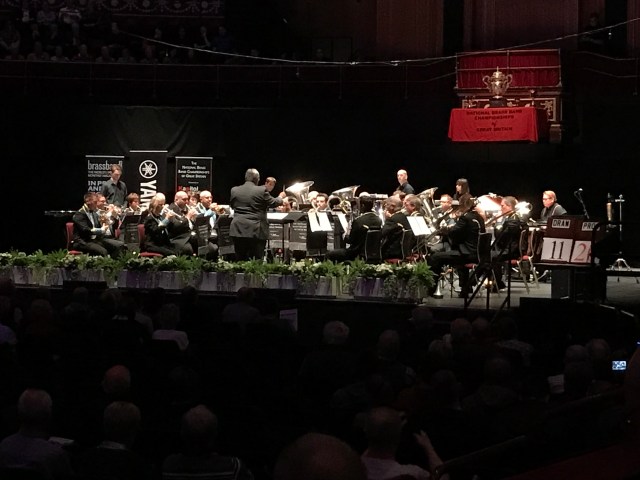
Woodfalls British Brass Brand
The Woodfalls British Brass Band on stage at the Royal Albert Hall

Thirty years ago, when we lived in Iowa, Paul payed tuba in the Eastern Iowa Brass Band, a British-style brass band that performed and competed in regional and national competitions. One year they were visited by the Desford Colliery Brass Band from Coalville, UK that was touring the states and performing. We hosted tuba players from that band in our home and I remember them as delightful folks who drank a lot of beer.

When we booked our trip to London, Paul noticed that the National Brass Band Championships of Great Britain were to be held in Royal Albert Hall , so he bought tickets in an effort to relive his brass band history.  We made our way to Royal Albert Hall and found our seats next to two very knowledgeable ladies from Cornwall who explained the competition system to us and told us which of the 20 competing bands not to miss. The bands perform in an order determined by a lottery, and the first band up was Desford Colliery Brass Band! Since they were first, they opened the competition with the National Anthem (and no one took a knee). In the competition, each band plays the same piece, so by the time I had heard Handel in the Band six or seven times, I was ready for a break. After a walk in the rain in search of coffee, we returned, soaked but refreshed. The ladies from Cornwall assured us the best was yet to come, so we settled in for some more. When you’ve listened to the same 16-minute piece of music over and over again, you start to wonder how the adjudicators remain sane, but finally we heard last year’s winner, the Brighouse and Rastrick band, and I felt like I was hearing the piece for the first time. It was a more nuanced performance with rounder sounds and lyrical phrases and I finally understood why that piece was chosen as the contest piece. Paul naturally was very interested in the tuba players, and at the end of the day he said he wasn’t sure whether he feels inspired to practice more or to give up tuba entirely. I had to ask him if the Brits were so good at playing brass instruments because of their stiff upper lips. He did not laugh.

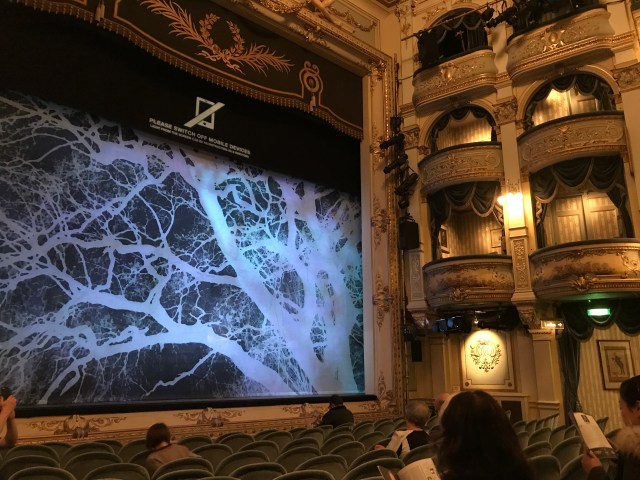
Wyndam’s Theater
In Wyndham’s Theater waiting for the curtain to rise. There was much discussion about whether the image on the curtain is a tree or neural pathways in a brain.

We left before the end of the competition because we had tickets for a show with our MSMT group. We made our way to Leicester Square via the Tube, and went to dinner at a pub near Wyndham’s Theater. The evening’s entertainment was the one straight play booked by MSMT, The Height of the Storm, starring Jonathan Pryce and Eileen Atkins, two British theater legends. It’s a family drama about growing old, dementia, loss, and love. It was disturbing at times but very compelling. I especially enjoyed seeing Eileen Atkins after enjoying her work on many of the British shows we see on PBS (like Doc Martin). It was a great production with an amazing set and effective use of lighting. As much as I love musical theater, I was reminded of how much I enjoy the intimacy of a straight play where I feel totally immersed in the story. We ended the evening with a group discussion of the play back at the hotel.

Tomorrow is a Harry Potter day for us in London. Stay tuned for details.


Getting There is Half the Fun

London Eye
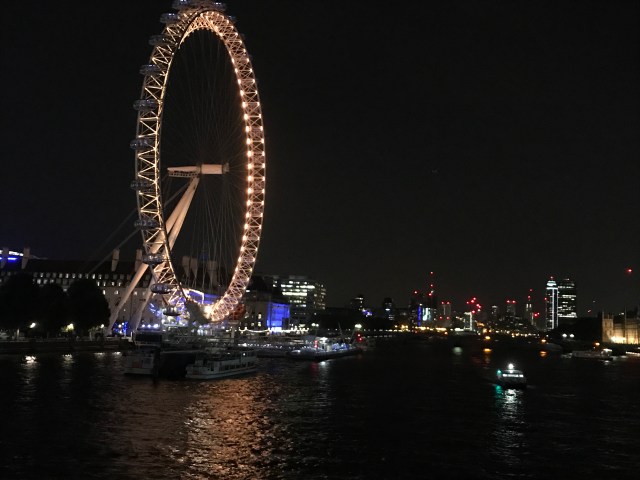
The London Eye as seen from Golden Jubilee walking bridge.

It seems that all our trips begin with some unforeseen snafu. A few days before we left for Italy last year, we had a huge storm that knocked down trees and power lines and left us without electricity for several days. We left our house with the power out, not knowing what might happen when in came back on in our absence. This time everything seemed fine as we boarded the bus for the airport. Less than 10 minutes into the trip, the hatch on the well in the bus where the luggage was stowed came open, and suitcases went flying out on the highway. Fortunately none were run over and the driver was able to retrieve them all without disrupting Route 1 traffic too much. I feared it might be an omen, but the rest of the trip went fairly smoothly.

On the plane from Boston, I decided to get a taste of British drama by watching the film Nothing Like a Dame, a documentary with four great British actors, Joan Plowright, Judi Dench, Maggie Smith, and Eileen Atkins. I thoroughly enjoyed listening to these brilliant women reminiscing and laughing together. I may watch it again on the flight home. (We will see Eileen Atkins in a play this week, but more about that later.)

When we arrived at the Royal Horseguards Hotel, our rooms were not yet ready for us, but we were treated to lunch at the  R. S. Hispaniola, a floating restaurant nearby. Jet lag was starting to set in, but we managed to stay awake during the 2-hour lunch and orientation. After lunch and a little nap, we set off for one of the activities we booked on our own, a concert at Royal Festival Hall. To get there, we crossed the Golden Jubilee Bridge, a lovely pedestrian bridge with excellent views of the London Eye.

Royal Festival Hall
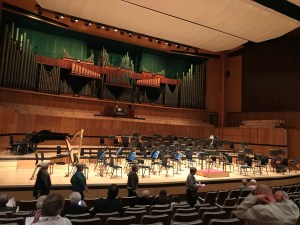
The Royal Festival Hall stage

The concert featured Welsh opera singer, Bryn Terfel,with the Royal Philharmonic Orchestra and two young signers, soprano Lauren Fagan and tenor Gareth Jones. The program was mostly opera with some show tunes at the end. It’s always a joy to hear opera singers in concert with an orchestra in a more intimate setting than a large opera house. Terfel was excellent, especially when he sang Abendlich strahlt der Sonne Auge from Das Rheingold, and I’m sure we’ll see more of the two younger singers as their careers take off.

Tomorrow we spend a good part of the day at Royal Albert Hall listening to brass music and then we see a play in the evening. I’ll share the details here.

Off on a New Adventure

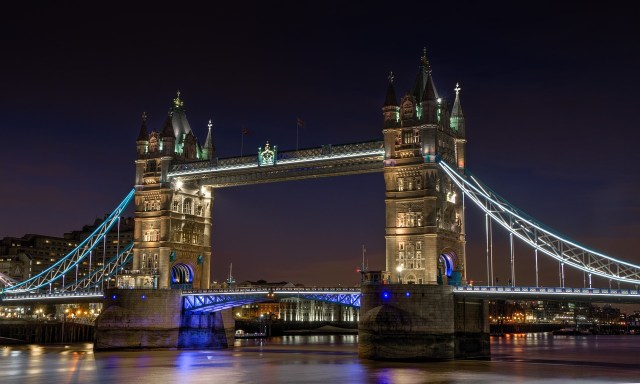
Tower Bridge in London
Tower Bridge Image from Pixabay, CC0

Paul and I are off on a new adventure today, so I’m returning to this blog to share it with family and friends. This time we’re on a group tour to London with folks from the Maine State Music Theater. This isn’t our first trip to London. We visited about 20 years ago, but we had our then 12-year-old son with us, so we planned our vacation around activities we thought he would enjoy. This time, our focus is on musical theater with a few other artsy and touristy activities thrown in.

The advantage to traveling with a group is that most of the planning has been done for us, and we don’t have to worry about transportation, hotels, or luggage. We’ll be staying for a week at the Royal Horseguards Hotel and attending five shows with the MSMT group. We’ve also booked some shows, musical events, and tours on our own, so it should be a fun-filled, action-packed trip.

If you want to enjoy London vicariously through us, you can follow this blog and receive emails each time I post, or watch for updates on Facebook. Facebook has changed its policy about automatically posting to timelines, so I’ll try to remember to manually add the post each day.

I’m off now to do some last minute packing and organizing. See you on the interwebs!

Planes, Trains, and Automobiles

64136EE7-6A9C-4290-9109-65EA81898A9D
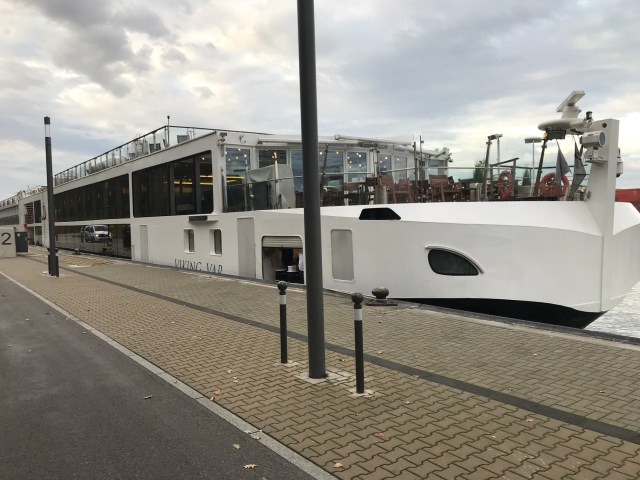
Goodbye to the Viking Longship Var

We’re home and it only took us about 21½ hours to get here from Nuremberg. We left the Viking Var yesterday at 10:30 am. (Nuremberg time) in a van that took us to the Nuremberg Airport. We had a short flight to Munich, a very long flight to Boston, a shuttle to the T, a subway train to North Station, and finally rode the Downeaster home to Brunswick. We arrived at the station at 1:40 am (EST) and walked the short distance to our house where we were pleased to find the power had been restored and nothing blew up while we were gone.

We had a fabulous three weeks, but it’s good to be home. I still have many photos to upload to this blog, but then I will be suspending it until we take another trip that seems worthy of documentation.

Thanks to all my family and friends who took the journey with me (virtually). I hope you enjoyed the photos and commentary and you’ll come back in the next few days to see what I’ve added now that I have reliable internet access. And, a little note for my BRHS friends – I want you to know that this blog was written entirely on an iPad, so it is possible!

I’m off now to unpack, do laundry, revive my neglected plants, and clean my house. As exciting as our trip was, I’m really looking forward to these mundane chores.

See you on the interwebs!

Nuremberg Past and Present

408BB77E-7E0B-4AE1-9172-A0C87C1F40A5
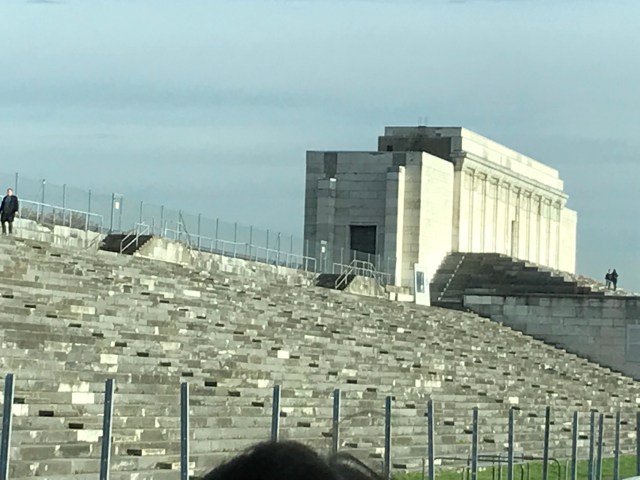
Hitler’s Stadium for Nazi Rallies

Any discussion of Nuremberg’s history has to include its role in Hitler’s Third Reich and World War II. Unlike Regensburg, the medieval old town of Nuremberg was heavily bombed during the war and most of historic buildings were destroyed and rebuilt.

We did not arrive in Nuremberg until around noon today. All morning we sailed up the Danube and into a canal with an amazing lock system that was our major source of entertainment (Really! It was interesting!).

Our tour of Nuremberg began after lunch. The first hour was by bus as we drove by the Nazi rallying sites, including the Deutsches Stadion, a neo-classical structure resembling the Colosseum that was never finished, and Zeppelin Field. Our guide was Annette, a young woman who studied singing at the conservatory in Nuremberg and who is a member of a group called History for Everyone. Their mission is to educate the people of Nuremberg and visitors about all aspects of its history and to ensure that the Nazi atrocities never happen again. Hitler chose Nuremberg as a place for the Nazi party and the Nazi Youth to convene because of its location and relevance to the Holy Roman Empire. Nuremberg also became the site of the famous war trials in 1946-48, partially because Nuremberg was the site for Hitler’s rallies, but mostly (according to Annette) because the Palace of Justice had not been damaged much and it had a prison next door, making transport of criminals less of a security risk.

D856478B-A26F-4CCD-8BFF-64538B5737B7
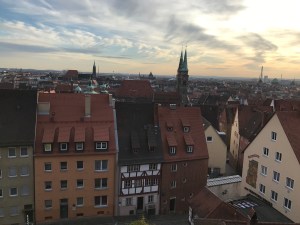
Nuremberg’s Restored Medieval Architecture

The next part of our tour was a walking tour of the walled, historical part of the city. As I mentioned before, many of the medieval buildings were destroyed in World War II and rebuilt in the same medieval style. The center of the old city is the Hauptmarkt where the famous Christmas market is being constructed this week but won’t open until the first week of December. On one side of the square is the beautiful Gothic Frauenkirch and an amazing fountain, Schöner Brunnen.

Paul and I did not return to the ship after the walking tour because we had tickets for the ballet, so we had a lot of free time to wander around the walled city. At one point we wandered the wrong way and found ourselves in the red-light district. I encouraged Paul to walk a little faster.

0CF31592-CD65-48C2-83D2-CF3885BBD2E3
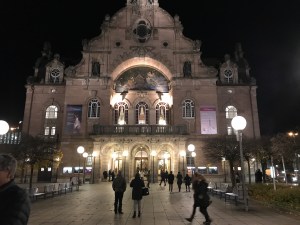
The Nuremberg State Theater

The ballet was at the Nuremberg State Theater, home of the Nuremberg Symphony, Philharmonic, and Opera.  The hall is smaller than I expected, but very comfortable and we had good seats, right in the center of the orchestra section. This ballet, Don Quijote is a relatively new work by Goyo Montero with music by Owen Belton, a sound designer who was commissioned for this piece. I didn’t really like the music much, but the ballet was visually stunning. I couldn’t take pictures of the performance, but you can see some on the theater’s website. It wasn’t classical ballet, but it was very compelling, and it was good to see so many young people in the audience.

Tomorrow we say goodbye to the Viking Var. We’ve had a wonderful vacation, but I must say, I’m ready to go home.

Regensburg Does Not Hide the Truth

Throughout our lives together, whenever Paul and I talked of traveling to Europe, he was reluctant to consider Germany and Austria as destinations because of their long history of antisemitism. Until today, our city tours never mentioned the darker part of their histories or the role they played in World War II and the Holocaust.

321170FF-DACD-4148-9391-6DDC1553B079
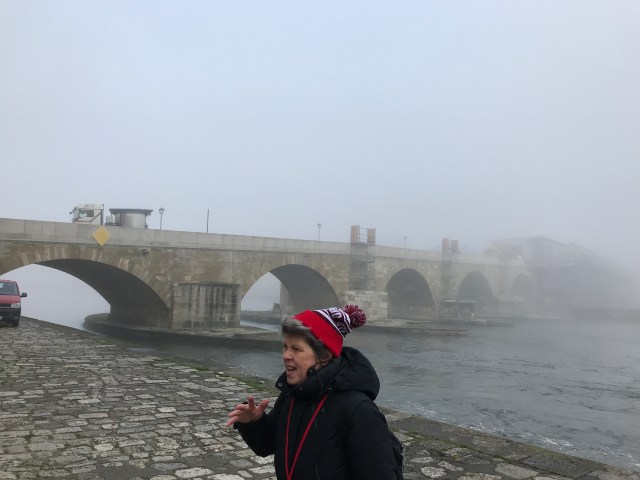
Our Guide, Ute, and the 12th Century Stone Bridge Across the Danube

Today we toured Regensburg’s well-preserved medieval city center. We joined the tour that promised us some Jewish history and our tour guide, Ute, delivered. Regensburg, like many Bavarian cities, was founded by the Romans and became an important trade center in the Middle Ages. This is apparent in the architecture of the city  where families built high towers to reflect their prosperity. There had been a Jewish community in the city since the 10th century, and the Jewish quarter is thought to be the oldest Jewish ghetto in Germany. The persecution of the Jews began in 1452 with recurrences throughout the years, but antisemetic sentiments were expressed earlier than that, including the Judensau image on the wall of St. Peter’s Cathedral, facing the Jewish quarter. Over the years, Jews were driven from their homes, accused of various crimes, imprisoned, and at one point their cemetery was excavated and the tombstones used as building stones in houses and churches. Our guide showed us an example of a building block in a doorway where you could still see the Hebrew inscription.

71C8D6A3-918F-4A89-9829-6C4AD76800C0
Memorial at the site of the old synagogue

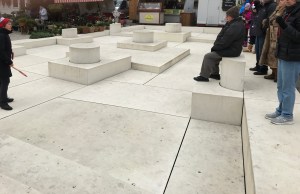
Ute made a point of saying that the people of Regensburg, rather than hiding the darker side of their city’s history, talk to and educate their children about it. Throughout the city center, you can see brass paving stones with engraved names in front of houses where Jewish people once lived but were driven out. These have been installed in recent years so these people will not be forgotten. In 2005 a memorial by Israeli sculptor Dani Karavan was erected in Neupfarrplatz, the site of destroyed Jewish synagogue.

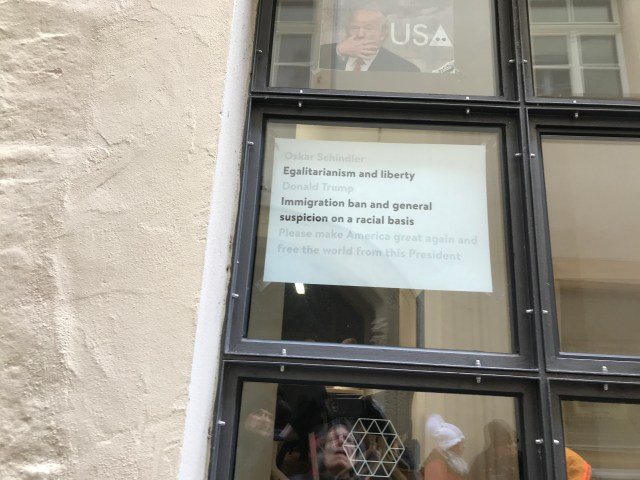
Oskar Schindler (Schindler’s List) lived in Regensburg for a time and there’s a plaque on the side of his house. Throughout our three-week vacation in Europe, I’ve tried not to think about politics at home, but the sign in the window of the Schindler house brought it all back.

91C688BD-DE4E-4558-91FF-D94C82195826
Sign in the Window of the Oskar Schindler House

After the tour, we returned to the boat and spent the afternoon and evening on board, sailing toward Nuremberg. The sun finally came out and I really wanted to take a walk on the sun deck, but it was closed all day. The ship has to pass under many low bridges on the Danube, so I guess the sun deck is not the place to be when that happens. We had dinner with another couple from Georgia, Paul and Beverly. He’s a retired philosophy professor with a love for music, and she’s a psychologist. Needless to say, the conversation was intellectually stimulating and very satisfying.

Tomorrow we will arrive in Nuremberg for the last day of our trip. We’ll take a walking tour of the city, and then we will go to the ballet, Don Quijote, at the Staatstheater Nürnberg. This is not a cruise event; Paul and I are going on our own so we’ll have to miss the ship’s Thanksgiving dinner. We figure we can have turkey any time, but we can’t miss an opportunity to see this ballet!

At the Confluence of Three Rivers

82B155F9-F367-42FD-89BF-AC9D04335D13
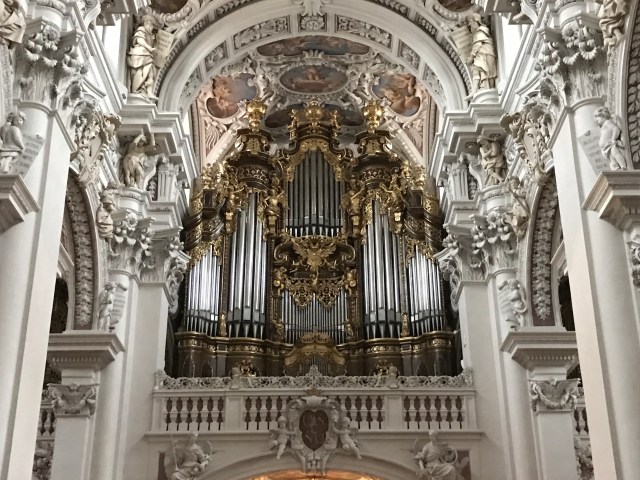
One of five pipe organs at St. Stephen’s Cathedral

Passau, Germany is a charming city on the border with Austria where the Danube, Inn, and Ilz rivers flow together. We’ve been told that the water of each river is a different color, but today it all looked the same – gray.

We had a dark, cold, wet morning for our walking tour of Passau, but it was still lovely. Our tour guide was Sofia, a native of Passau who attended high school and university there and clearly loves the history and baroque architecture of her home town. Passau’s location at the confluence of three rivers is, in Sofia’s words, a blessing and a curse. The rivers are a boon for commerce, but they often flood, leaving much damage behind. Many buildings have high water marks on their facades, and it was apparent that, had we been walking the streets during the flood of 2013, we would have been several meters under water.

The highlight of the tour was St. Stephen’s Cathedral (there are many St. Stephen’s churches in this part of Germany and Austria). We have seen many churches in our travels, but what sets this one apart is its spectacular pipe organ with 17, 974 pipes, the largest in Europe. It’s actually five organs (one in the framework of the ceiling!) that can be played separately or as one. Had we come to Passau even a month earlier, we would have been able to attend an organ concert here, but we missed it.

D2C919B4-4752-4479-B871-415453D06D8E
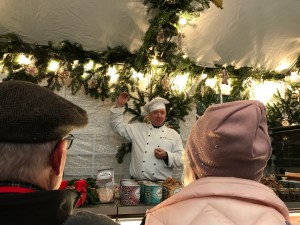
Gingerbread Demonstration

Our tour of Passau ended at Cafe Simon where we were treated to a cup of hot spiced wine and a Lebkuchen (gingerbread) demonstration and tasting.

In the afternoon, we took a bus to Gut Aichet, a beautiful Bavarian farm that has been run by generations of the same family since 1472. The farm has become a riding center, with more than 50 horses in its stables and facilities for dressage and show jumping training. The hunting lodge on the property was the site for our Bavarian Beerfest where we were served beer and pretzels and entertained by a very talented fourteen-year-old accordion player.

FE2A4F93-1402-420D-B341-D651612A4E54
At the Bavarian Beerfest

The owner of the farm demonstrated some traditional dancing and even taught the dance to a few volunteers who may have been more successful if they had learned the dance first and then consumed the beer. (I have some video clips that I’ll add when I have more robust WiFi.)  It was the perfect way to spend a cold rainy afternoon.

Back on the boat, we had dinner with two couples, one from Georgia and the other from New York. We leaned all about farming in Georgia, shared opinions about our health care system, and only occasionally talked about sports. Paul and I skipped the evening’s festivities in the lounge and turned in early.

Tomorrow we’ll stop in Regensburg for another city tour on the beautiful blue Danube.

Göttweig Abbey and the Wachau Valley

Today was a traveling day. After our morning shore excursion, we spent all afternoon and evening on the boat, sailing through the region on the Danube between Krems and Melk known as the Wachau, and then heading toward Passau, Germany.

E900FC00-CB39-4643-8512-0B33EF188550
Göttweig Abbey

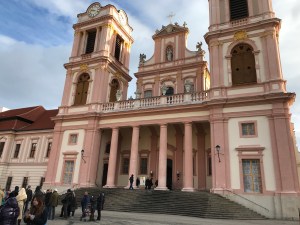
Our morning excursion was a visit to the beautiful Göttweig Abbey. It’s a 900-year-old Benedictine monastery, high up on a mountain, overlooking the Wachau valley. The original abbey burned but was rebuilt in the early 18th century. We were greeted by our tour guide and served a sparkling apricot wine which I gladly accepted figuring it was five o’clock somewhere. The wine is one of the many products of the abbey’s orchards and vineyards that the monks make and sell. After an introductory video, we were taken on a walking tour. The imperial wing of the abbey is impressive, featuring a spectacular grand staircase in the baroque style, surrounded by statues and a ceiling fresco by Paul Troger.

DA8FE59C-AC50-4BFE-92AF-9FE190D3864C
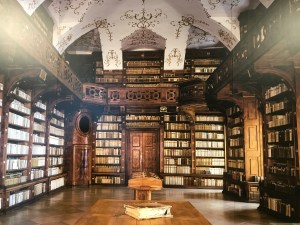
The library at Göttweig Abbey

The abbey also houses a huge library that was, unfortunately, not open to the public, but I took a picture of a picture of it. I love libraries and I wish I could actually walk into this one. We also visited the abbey church where we admired another huge pipe organ. It’s too bad we weren’t here for Mass on Sunday when we would have heard it played.

After the tour, we were treated to a wine tasting, with the option to purchase some, of course. We tasted a red (Stift Göttweig), a Riesling, and another white the name of which I cannot remember. We decided to buy a bottle of the red, and we’ll save it to enjoy with our son when he comes home for Christmas.

Back on the boat, we spent the afternoon sailing and half listening to commentary over the ship’s PA system by our Program Director, Boris. I took that opportunity to get in some steps on the walking track on the sun deck, hoping that bucking the wind would burn off some of the extra calories I’ve been consuming. As I walked, I watched castles and terraced vineyards pass by. We had Austrian Tea Time later and apple strudel was served. I managed to resist and had only a small bite of Paul’s. It was delicious.

BF67AADD-B0E8-46DE-B4E5-DFB273C1AC1D
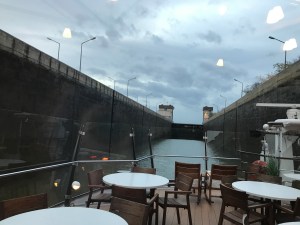
Passing through a lock

On our journey to Passau, we passed under bridges and through at least one lock (there may have been others in the night that I missed). Passing through the lock was cool, although a bit claustrophobic. We watched it from the lounge in the bow of the boat so we had a good view of the whole procedure.

After dinner, we returned to the lounge for the evening’s entertainment, a music trivia contest. Paul and I did pretty well, but we didn’t get bonus points for dancing, so other teams beat us. Today reminded me why I’ve never really had any desire to do an ocean cruise. There’s definitely a cruise culture that I just can’t get into. As hard as the staff works to keep people entertained while we’re traveling from port to port, I get bored easily. I much prefer the shore excursions and cultural activities.

Tomorrow we dock at Passau for a tour in the morning and then Bavarian Beerfest!